Art Cologne Palma de Mallorca 2026
DATE: from April 9, 2026 to April 12, 2026
PLACE: Palau de Congressos Palma Bay | Booth G234
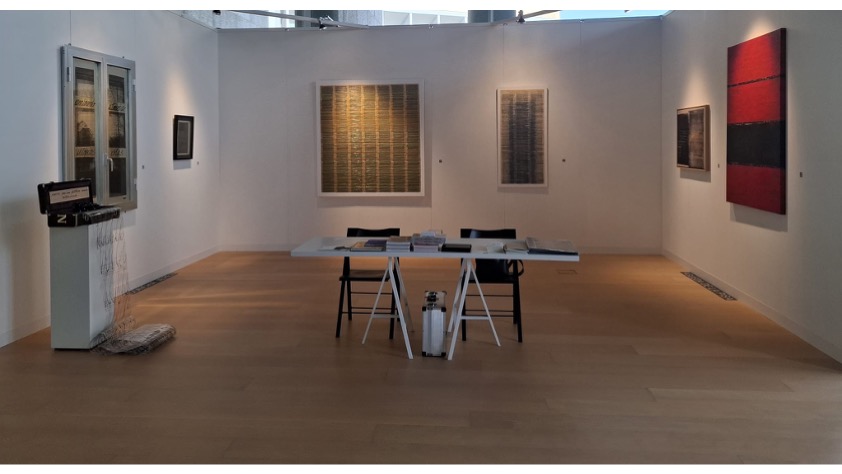
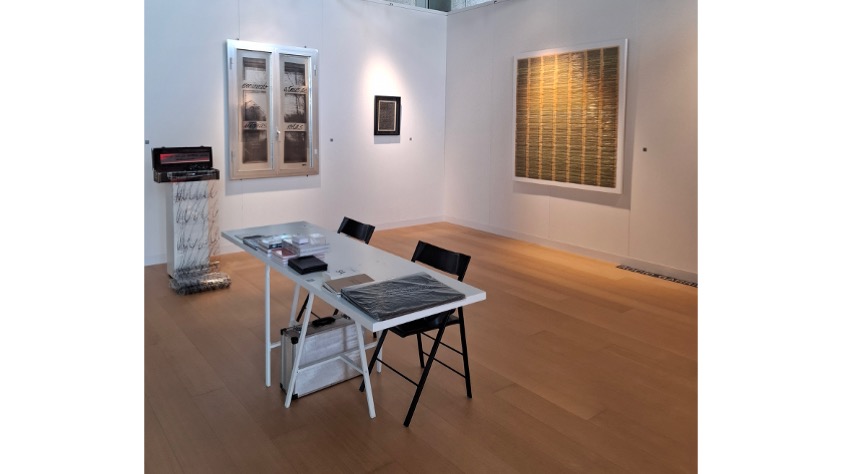
Freijo Gallery presents a booth bringing together works by three Spanish artists from different generations — Concha Jerez (1941), Águeda de la Pisa (1942), and Rocío Garriga (1984) — articulating a conceptual dialogue around language, memory, paper, and the written word as material.
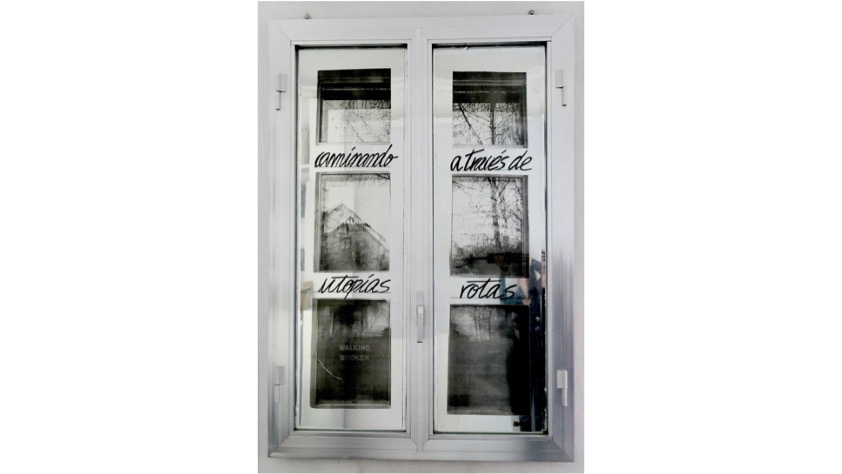
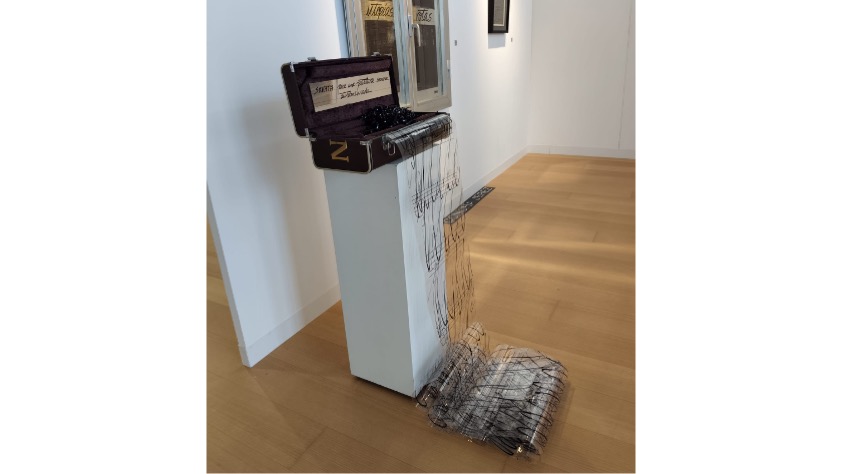
By Concha Jerez (Spain, 1941), this exhibition presents a selection of works that span different periods of the artist’s career. These works are unified by their connection to Concha Jerez’s ongoing exploration of self-censored texts, a conceptual framework she began in the 1970s. Concha Jerez’s work is based on the word, dismantling it to reveal its communicative power; in every instance, language emerges as a critical tool. Caminando a través de utopías rotas (1994–1996) was part of the installation WALKING THROUGH INTERFERENCES BEYOND BROKEN UTOPIAS, exhibited at ESC medien kunst labor (Graz, Austria, 1994), where various elements of the exhibition space—such as chairs, tables, a hole in the wall, the sides of the doors, and of course the windows—were marked with a marker, a characteristic gesture of the artist. Thus, the space is activated and the window is transformed into a device for political enunciation, shifting it from its practical function toward a conceptual dimension. In Recuperación de una crítica de arte (1978), the marker intervention renders an art review from the newspaper El País illegible; the original message fades away in favor of a new construction, where absence and illegibility generate an alternative meaning. Meanwhile, in Sonata para una partitura sonora autocensurada (2018), the absence of a musical instrument and the musical score, which has been altered with a marker, preclude a conventional musical performance.
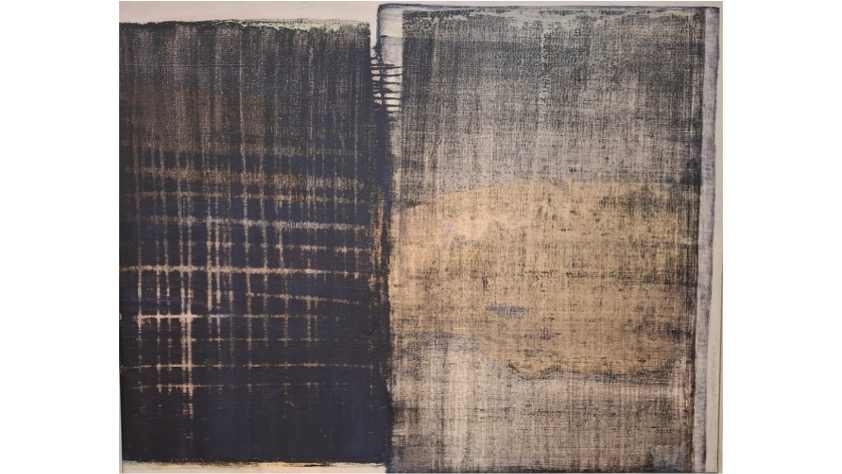
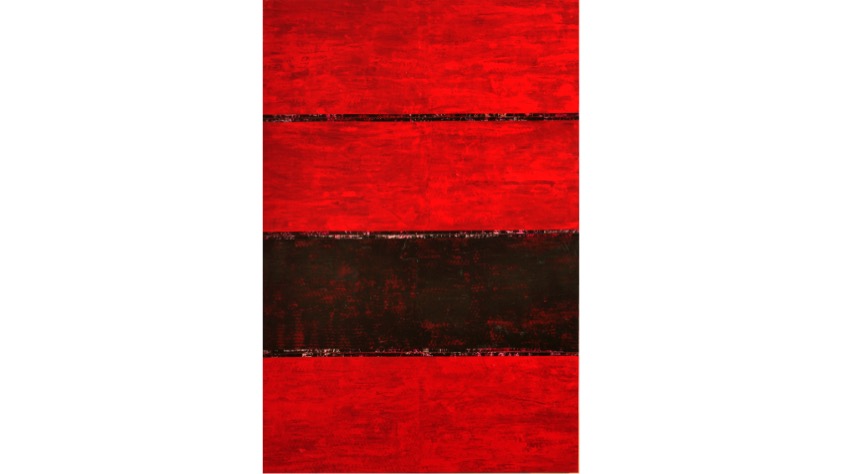
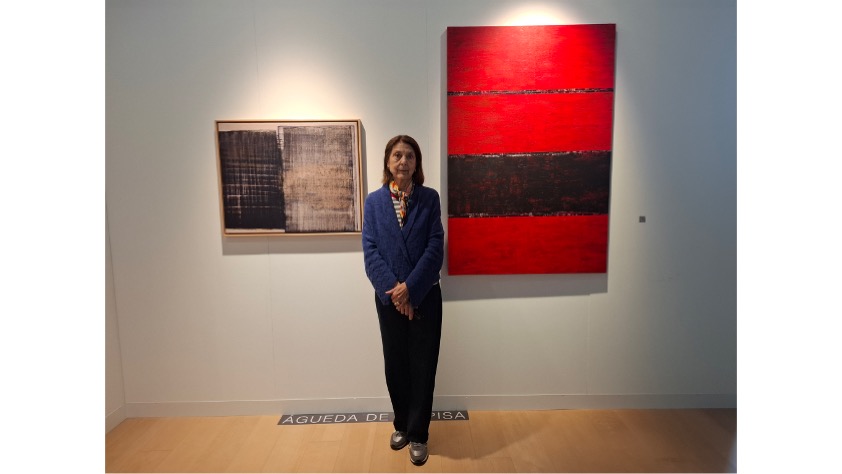
By painter Águeda de la Pisa (Spain, 1942), we present one work, Untitled, created in 1982; one from 2005, Última luz; and two more recent pieces: Entre lo sucedido y lo por suceder (2021) and Azul Roto (2026). This selection outlines the evolution and unique style of her work. On a technical level, she began with oil on canvas, a medium she abandoned in the 1990s in favor of acrylic painting and collage. The written word appears recurrently in her work, both in texts that are part of the collages integrated into the pieces and in the poetic references present in some titles. However, these words do not aim to convey an explicit message; rather, they are integrated as another material within the composition, contributing to the creation of a dimension in which information and abstraction coexist. The result is a meditative body of work, both in its intent and in the effect it produces on the viewer.
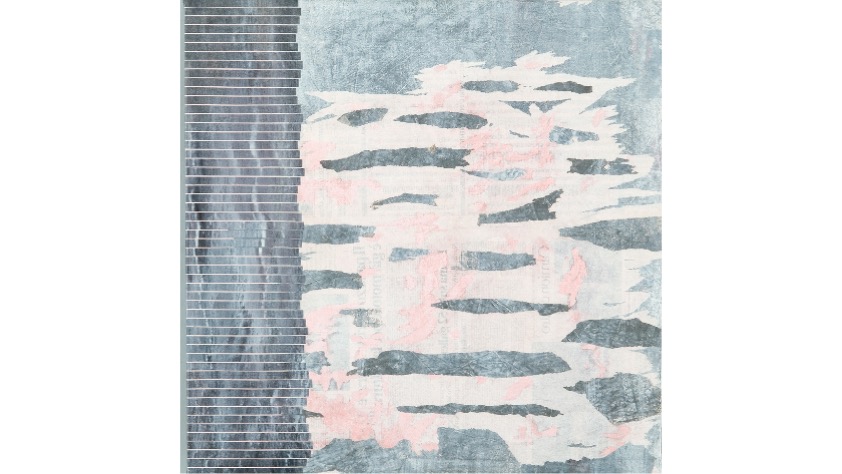
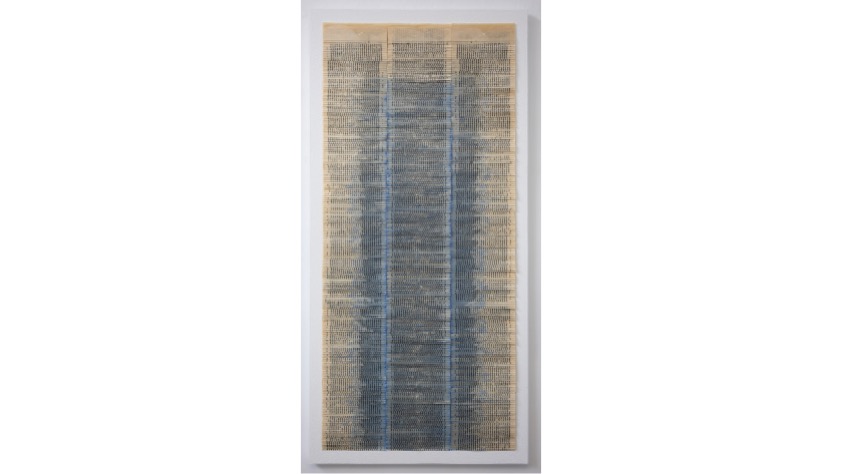
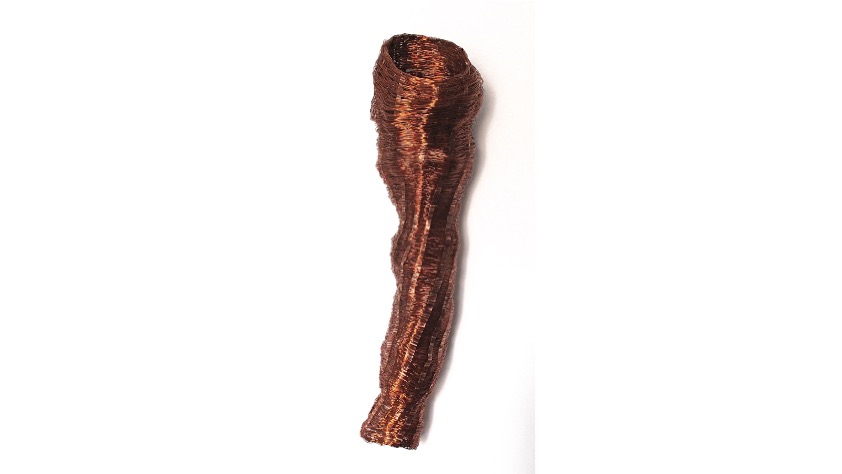
These same themes—language, memory, and the materiality of text—are revisited in the work of Rocío Garriga (Spain, 1984). Eco en Azul (2026) and Dejar de ver la montaña como montaña (2025) are works that form part of Noción de paisaje, a project developed from literary classics—Siddhartha by Hermann Hesse and The Magic Mountain by Thomas Mann, respectively. Treated with coloured wax, the pages of different editions of the same book are transformed into visual surfaces where the text dissolves and the book becomes landscape. Garriga’s sensibility and technique intertwine her creation with that of the authors. We also present Rocío Garriga’s Tiempo prestado al espacio (From Rossano’s Saint Bartholomew the Younger to Saint Flora, 158 hours) (2009) and Tiempo prestado al espacio (From Saint Genevieve to Saint Francis de Sales, 182 hours) (2010), two works made of woven copper.


Dossier Art Cologne Palma de Mallorca
Article published in the Mallorca Zeitung about Freijo Gallery's participation in the fair.